
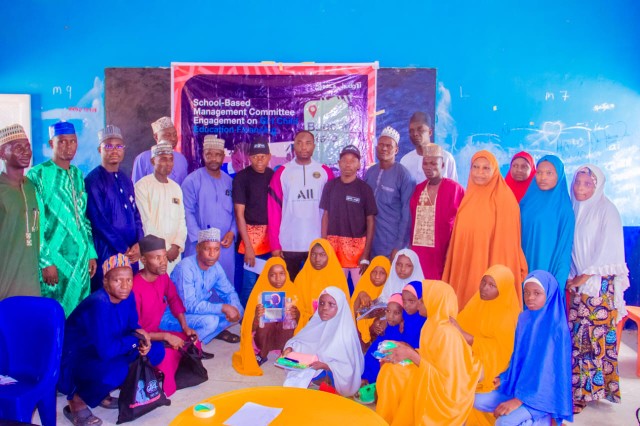

By Bashir Aliyu
In Bauchi State, BudgIT/Tracka, with support from the Malala Fund, has intensified its advocacy for girl-child education financing by engaging rural communities through a series of town hall meetings and School-Based Management Committee (SBMC) engagements. The initiative aims to address barriers affecting girls’ access to education and promote increased government
financing for the sector.
The community town hall meeting focused on the challenges hindering girls’ access to quality education and highlighted the critical roles of communities, government stakeholders, civil society organizations, traditional institutions, religious leaders, and the media in advocating for improved funding and support for girl-child education. Participants emphasized the need for collective action and sustained engagement with relevant government authorities to ensure adequate budgetary allocations for programmes that improve girls’ enrolment, retention, and completion of education.
Prior to the community engagements, BudgIT/Tracka had commenced high-level advocacy efforts by convening policymakers, civil society organizations, development partners, and other stakeholders to advocate for specific budget allocations that directly address the needs of girls.
The advocacy also focused on strengthening monitoring, transparency, accountability in education financing, and improving data collection and management related to girls’ education.
The town hall meeting further emphasized the need for dedicated budget lines for girls’ education and the harmonization of girls’ education data management processes. This requires a collaboration with the relevant Stakeholders such as; the Ministry of Education, Bauchi State Ministry of Finance, Bauchi State Ministry of Budget, Economic Planning and Multilateral Coordination, Bauchi State Universal Basic Education Board (SUBEB), Bauchi State Ministry of Women Affairs and Child Development, Education Management Information System (EMIS), Bauchi State Bureau of Statistics (BBS), Bauchi State Agency for Mass Education (BASAME),
and the Local Government Education Authority (LEA).
Participants at the meeting included community-based organizations, representatives of the Ningi Local Government Education Authority, resource organizations, community and religious leaders, local media representatives, women and youth leaders, women groups, and non- governmental organizations. They were encouraged to strengthen annual school census data management systems to support evidence-based advocacy for increased financing of girl-child education.
Speaking during the event, a representative of the Ningi Local Government Education Authority, Mallam Adamu Maigida, expressed support for girl-child education financing, stressing the importance of educating girls for community and societal development.
The Programme Officer of MUMSA Initiative, Aliyu Salihu, described the meeting as part of ongoing efforts to collaborate with relevant stakeholders in advocating for increased financing of girl-child education. He emphasized that accurate and credible data remains the foundation for effective planning, policymaking, and advocacy for dedicated budget allocations for girls’
education.
As part of the discussions, BudgIT/Tracka shared the example of the Kaduna State EduMarshal initiative introduced during the administration of former Kaduna State Governor, Mallam Nasir El-Rufai. The initiative was established to enforce free and compulsory education and reduce the number of out-of-school children. Its functions include identifying school-age children who are not in school during learning hours, engaging parents and community leaders on the importance of education, and collaborating with education authorities to enroll children into formal and non-formal learning centres. Participants were encouraged to advocate for the
adoption of similar initiatives in Bauchi State to strengthen efforts toward free and compulsory
education, particularly for girls.
Community and religious leaders present at the meeting expressed appreciation for the initiative and reaffirmed their commitment to supporting efforts that ensure girls receive quality education. Similarly, the Youth Leader of Ningi commended BudgIT/Tracka for organizing the engagement and called on the Bauchi State Government to create an enabling environment that supports
girls’ educational development across the state.
A key outcome of the meeting was the renewed commitment by participants to advocate for increased financing of girl-child education and work collectively toward ensuring that the Bauchi State Government allocates substantial resources to programmes and interventions that improve educational opportunities for girls. Participants also emphasized the importance of generating credible data on girls’ education, establishing mechanisms to monitor and enforce free and compulsory education, and creating specific budget allocations dedicated to girls’ education.
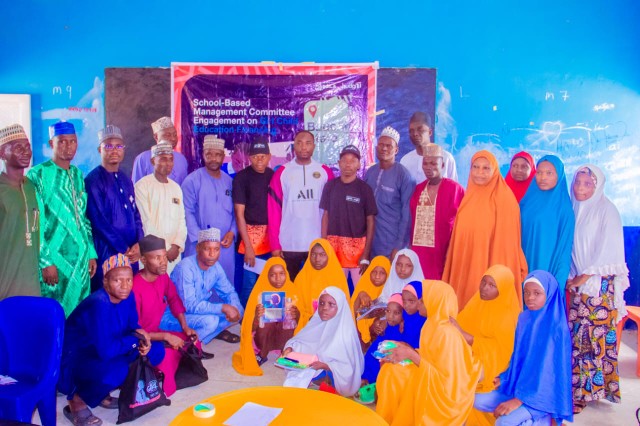
On the other hand, the School-Based Management Committee (SBMC) engagement held at Baki Primary School brought together SBMC chairman and members, PTA representatives, teachers from primary and secondary schools, parents, guardians, women and youth leaders, students, religious leaders, community leaders, and community-based organizations.
The engagement focused on strengthening collaboration and community ownership in supporting girl-child education. Discussions highlighted the importance of financing girls’ education, improving learning environments, addressing factors responsible for school dropout among girls, and encouraging stakeholders to participate actively in advocacy efforts aimed at securing increased government investment in girl-child education. Souvenirs were also distributed to students and participants.
BudgIT/Tracka reiterated that education financing must directly benefit adolescent girls. Investing in girls’ education is not merely a social responsibility but one of the most strategic investments Bauchi State can make. When governments provide safe and supportive learning
environments, girls are more likely to remain in school and thrive academically.
Speaking during the engagement, the Chairman of the School-Based Management Committee of the Junior Secondary School section, Alhaji Ibrahim Nuduni, stated that the SBMC, school management, and community stakeholders would continue advocacy efforts to ensure increased government support for girl-child education financing. He also encouraged stakeholders to prioritize the collection and documentation of school-level data to strengthen advocacy efforts.
The Principal of Government Junior Secondary School, Baki, Hassan Abubakar Ningi, emphasized the importance of community and religious leaders’ support in improving girls’ enrolment and retention in schools. Mallam Bala Adamu, Chairman of the School-Based Management Committee of the Primary School section, appealed for the provision of critical infrastructure such as classrooms, safe
learning environments, sanitary facilities, and measures to ensure that every female child in the
community is enrolled in school.
The Head Teacher of Baki Primary School, Muhammad Sabiu Nuhu, expressed appreciation for the renewed focus on girl-child education financing. He noted that effective delivery of girls’ education requires coordinated action across multiple government ministries and agencies. Students from both the primary and junior secondary school sections, Fatima Hamisu Sulaiman and Fatima Usman, highlighted several challenges affecting their learning experience, including the lack of separate toilet facilities, inadequate learning materials, overcrowded classrooms, and an insufficient number of female teachers. They recommended the provision of separate toilets
for girls, regular supply of learning materials, construction of additional classrooms, and recruitment of more female teachers to promote gender equity and provide a safer learning environment.
Key Recommendations
- Participants at the SBMC engagement made the following recommendations:
- 1. Creation of dedicated budget lines for girls’ education.
- 2. Increased capital expenditure allocations for girls’ education programmes.
- 3. Provision of free educational support, including uniforms and transportation, to improve
enrolment and retention. - 4. Construction of additional classrooms, toilets, and water facilities to create safe and conducive
learning environments. - 5. Targeted support for out-of-school girls.
- 6. Recruitment of more female teachers.
- 7. Provision of sanitary and hygiene facilities for female students.